Showing posts with label lepanthes. Show all posts

Wednesday, June 10, 2015

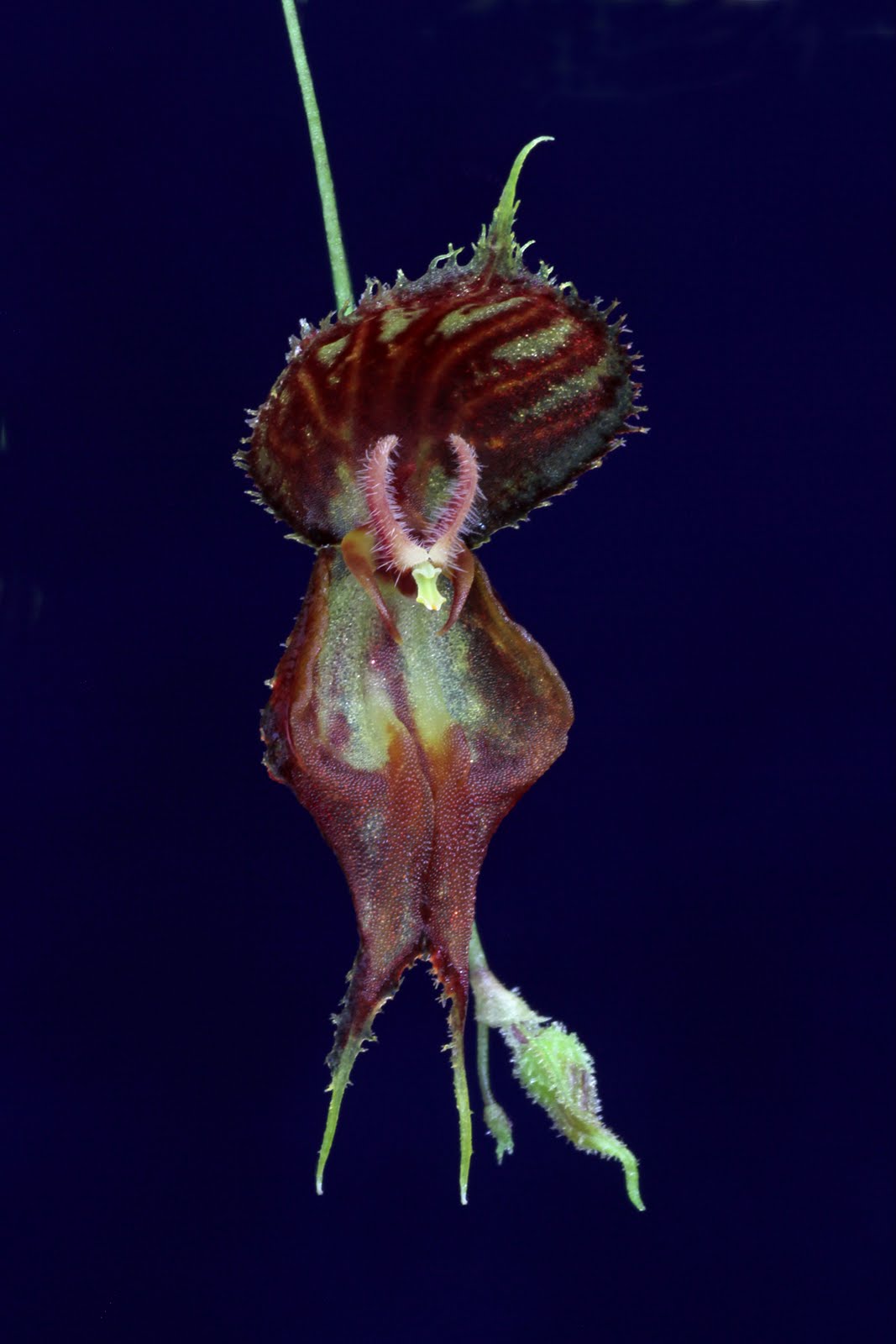
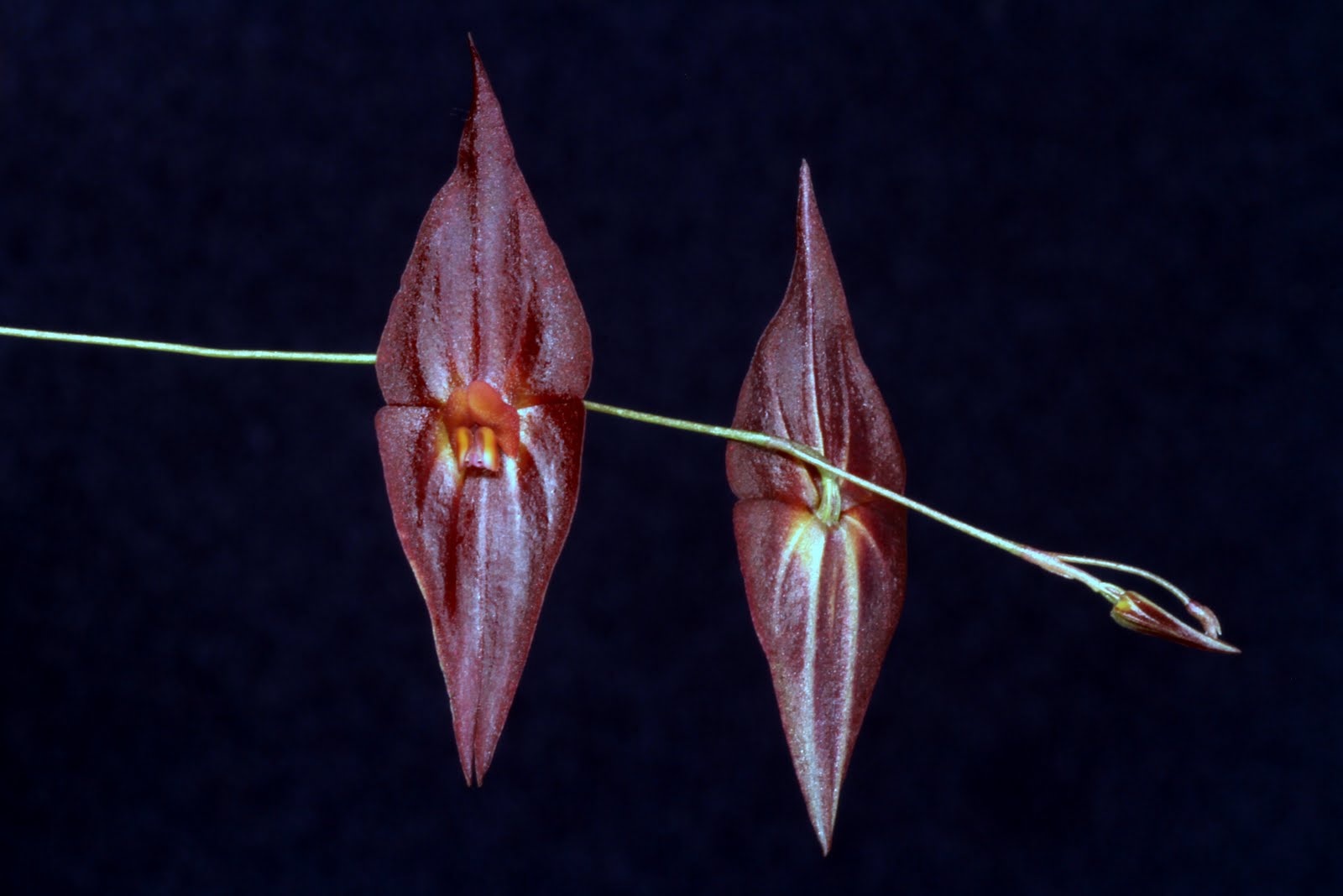
Lepanthes ribes

I had given this plant up for dead but noticed today that it was putting up new growth and had even produced a flower, so I moved it to a more suitable location  in the hope it will flourish there.  It comes from Ecuador and Colombia and is only about 6 cm tall, but the flower is nearly 1.5 cm.  As is often the case with Lepanthes, it bears its flowers on thin, wiry spikes, in this case about 6 cm long.  The name of the species, ribes, refers to its fancied resemblance of the flowers to the fruits of plants in the genus Ribes.


Monday, March 10, 2014

Lepanthes calodictyon

This is one of the most desirable species in the genus, Lepanthes, not for its flowers but for its beautiful patterned leaves.  It is from Colombia and Ecuador and the plant is about 5cm tall with leaves 3cm in diameter and flowers that are only 8mm.  The species name refers to the net-patterned leaves.  I have trouble growing this with my cool-growing plants and am growing it now in a warmer area in a small terrarium.


Monday, June 18, 2012

Lepanthes ingridiana

Lepanthes ingridiana is a rather rare species from Ecuador whose flowers are some of the largest in the genus.  The plant itself is also quite large, for the genus, 15-20 cm tall.  It bears a single 5 cm leaf on an upright stem with the typical bracts of a Lepanthes.  The plants are native to Ecuador and Columbia and come from higher elevations.  They require cool temperatures in cultivation.


The bright yellow spidery flowers are huge for the genus.  Fully extended they would be around 7 cm long, but they tend to hang in a kind of half-circle under the leaves.  The flowers appear successively with a new bud forming as the previous flower opens.  The plant is almost always in flower, therefore, with each new growth adding its succession of flowers to those already blooming.

Monday, February 27, 2012

Lepanthes escobariana

Here is Lepanthes escobariana once again.  One of my favorite Lepanthes, it is easy to grow and the flower spikes produce flowers successively over a very long period of time so that the plant is always in bloom with very large flowers for the size of the plant.  It comes from Colombia and is named for a Colombian orchid grower, Rodrigo Escobar.  The flowers are about 2 cm tall and are arranged on long wiry spikes that grow from the leaf-base of single-leaved growths about 3-4 cm tall.


Monday, September 19, 2011

Lepanthes nycteris

Lepanthes nycteris is from Bolivia and Peru and belongs to a group of orchids whose flowers are mostly small but very unusual, very complex and often very colorful.  A previous blog post shows a large number of these flowers (see below).  In this case the rather strange flowers are named after a family of bats, the Slit-faced Bats, or Nycteridae.


The plant is 6-7 cm and the flowers a little over 2 cm tall.  The plant has oval leaves on thin, wiry stems and the flowers come in succession on thin dangling spikes.  For this reason the plant is better grown mounted, and mine is on a thin piece of cork bark.  Since it comes from high altitude cloud forest, it should be grown cool and moist and prefers quite low light.


For more information on the genus Lepanthes see this post:
http://orchidsinbloom-ron.blogspot.com/2011/08/lepanthes-jewels-of-orchid-world.html

Tuesday, August 30, 2011

Lepanthes, Jewels of the Orchid World

Lepanthes is a genus of orchids from Central and South America with well over 800 species in the genus. It is known for its colorful flowers, which are often very intricate, very odd-shaped and very colorful, though sometimes very small. The flowers can be several centimeters in size, but are often only a few millimeters. Even the tiniest flowers, however, are amazing when viewed under a magnifying glass, or photographed with a macro lens. They can well be thought of as the jewels of the orchid world.

L. escobarina

L. orion

L. niesseniae

L. ophioglossa and L. ingridiana

L. telipogoniflora

L. elegantula

L. caprimulgus

L. hirtzii

L. gargoyla

L. cochlearifolia and L. unidentified species

L. felix

L. discolor

L. pastoensis

L. velicata

L. stenophylla

L. agglutinata and L. meniscophora

L. calodyction

L. hirsuta

Note: the last two photos are not mine.  They are AOS awards photos and I have no idea who the photographers were.  If I am using them improperly I would be more than ready to apologize and remove them.


Friday, February 25, 2011

Lepanthes caprimulgus

This incredible miniature plant is quite rare.  It comes from Ecuador and Peru and is only about 6 cm tall, but the flower is nearly 1.5 cm.  As is often the case with Lepanthes, it bears its flowers on thin, wiry spikes, in this case about 6 cm long, but curving over so that the flower is usually facing the plant.  The name of the flower refers to its fancied resemblance to the genus of birds which include the Whip-poor-wills and Goatsuckers.


Saturday, February 5, 2011

Lepanthes elegantula

Lepanthes elegantula, a species from Ecuador, certainly lives up to its name: it is indeed most elegant.  The plant is erect and stands at 5-6 cm.  The flowers are nearly 2 cm tall, very large for a Lepanthes, and are a dark satiny purple that is very difficult to photograph.  The flowers come one or two at a time, blooming successively on wiry  flower spikes that stand well above the foliage.


Monday, January 10, 2011

Lepanthes telipogoniflora

Lepanthes telipogoniflora is one of the most beautiful and sought-after species in this genus of tropical jewels.  Its large flowers dwarf the tiny plants which produce them and the red-orange color of the flowers stands out in any collection.  The plant is from Colombia and is a relatively new discovery, having only been described for the first time in 1996.  Its name, telipogoniflora, refers to the perceived resemblance of the flowers to those of another orchid genus, Telipogon.


The leaves, which grow in a tight cluster are about 1 cm at their largest, the flowers about 3 cm in diameter.  The flowers are not especially long-lasting, but are produced in succession so that the plant is seldom without flowers.  It is difficult to catch the color of the flowers and their satiny texture, and the lip and petals are so tiny as to go almost unnoticed in the center of the flower, but are very intricate and beautiful when viewed closely.  The plant is supposed to be warm growing but does very well for me in cool conditions with high humidity.